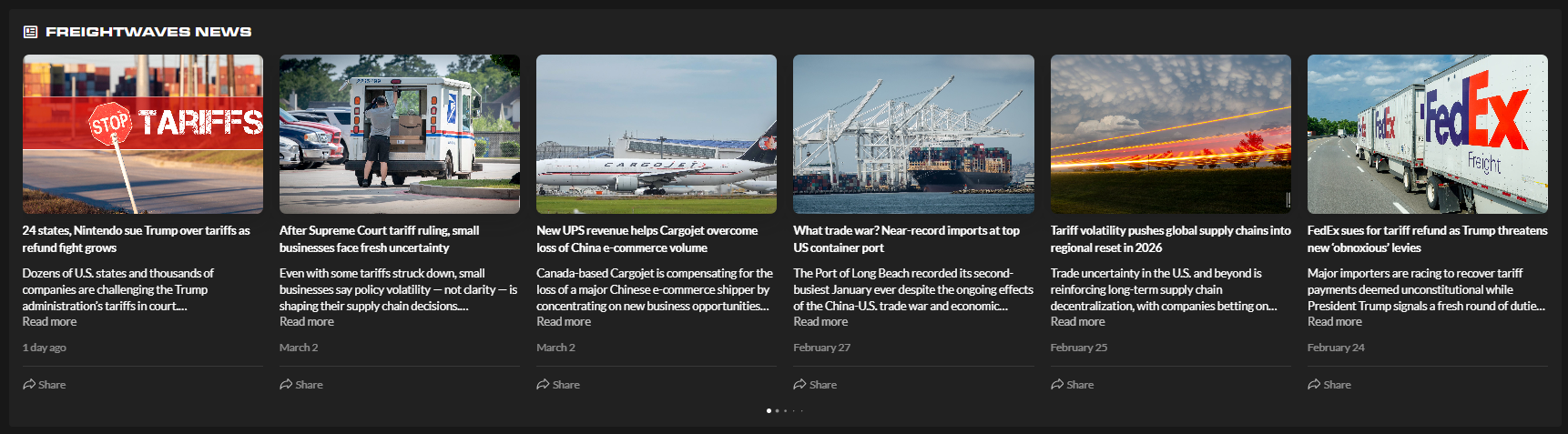
The Trade War Command Center connects multiple sectors of the supply chain to show how global trade disruptions ripple through freight markets and logistics networks.
Global Freight Demand Signals
The dashboard tracks forward-looking and real-time freight indicators that reveal shifts in global trade flows.

Together, these indicators help users understand whether trade disruptions are increasing, shifting, or suppressing freight demand across the transportation network.
Warehousing and Inventory Pressure
Trade shifts often lead to changes in inventory strategy and storage demand. The dashboard highlights these signals through warehousing metrics such as:
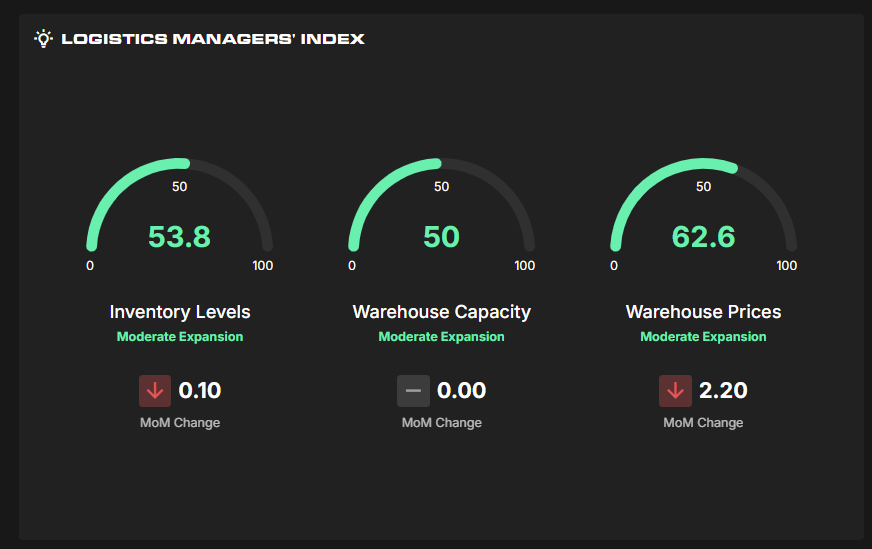
These indicators help identify whether companies are preparing for increased demand, adjusting to trade disruptions, or managing excess inventory.
Multimodal Supply Chain Visibility
By connecting ocean, rail, truckload, and warehouse indicators in a single view, the dashboard helps users understand how trade shifts impact:
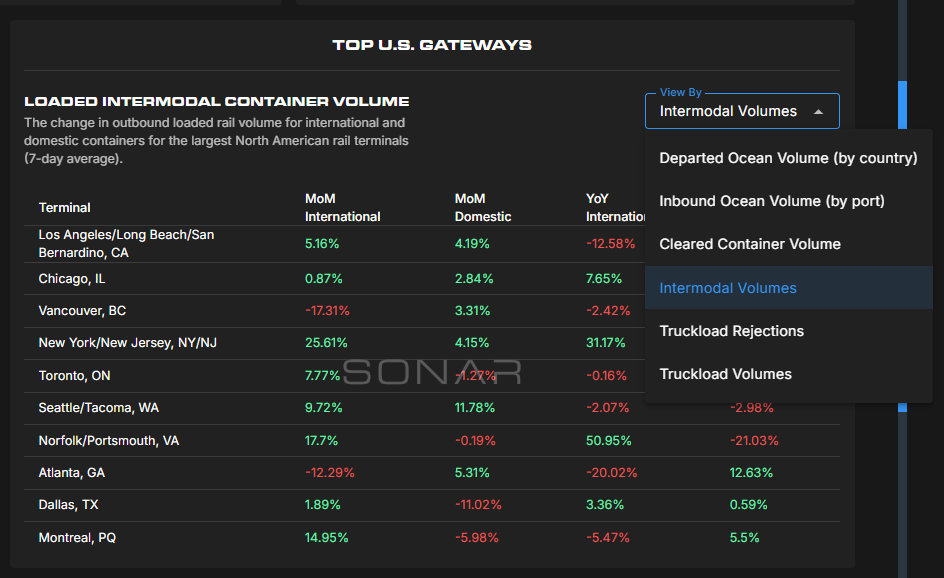
This multi-layered perspective allows users to see both upstream trade signals and downstream freight impacts.
The Trade War Command Center simplifies a complex global landscape by bringing critical supply chain signals into one actionable dashboard.
Instead of monitoring multiple datasets, reports, and news sources separately, users gain a single operational view of global trade disruption and freight market response.
This provides several key advantages:
With the Trade War Command Center, teams can move beyond reacting to global trade headlines and instead rely on real data signals to anticipate market shifts and make more informed supply chain decisions.